Distributed Acoustic Sensing Explained: How It Works and Where It’s Used
As industries seek smarter ways to monitor infrastructure and environments in real time, fibre optic sensing technologies are gaining widespread attention. One of the most advance and versatile of these technologies is distributed acoustic sensing, which transforms standard fibre optic cables into powerful, continuous sensing systems. By enabling large-scale monitoring with high accuracy, this technology is reshaping how organisations detect, analyse, and respond to physical events.
What Is Distributed Acoustic Sensing?
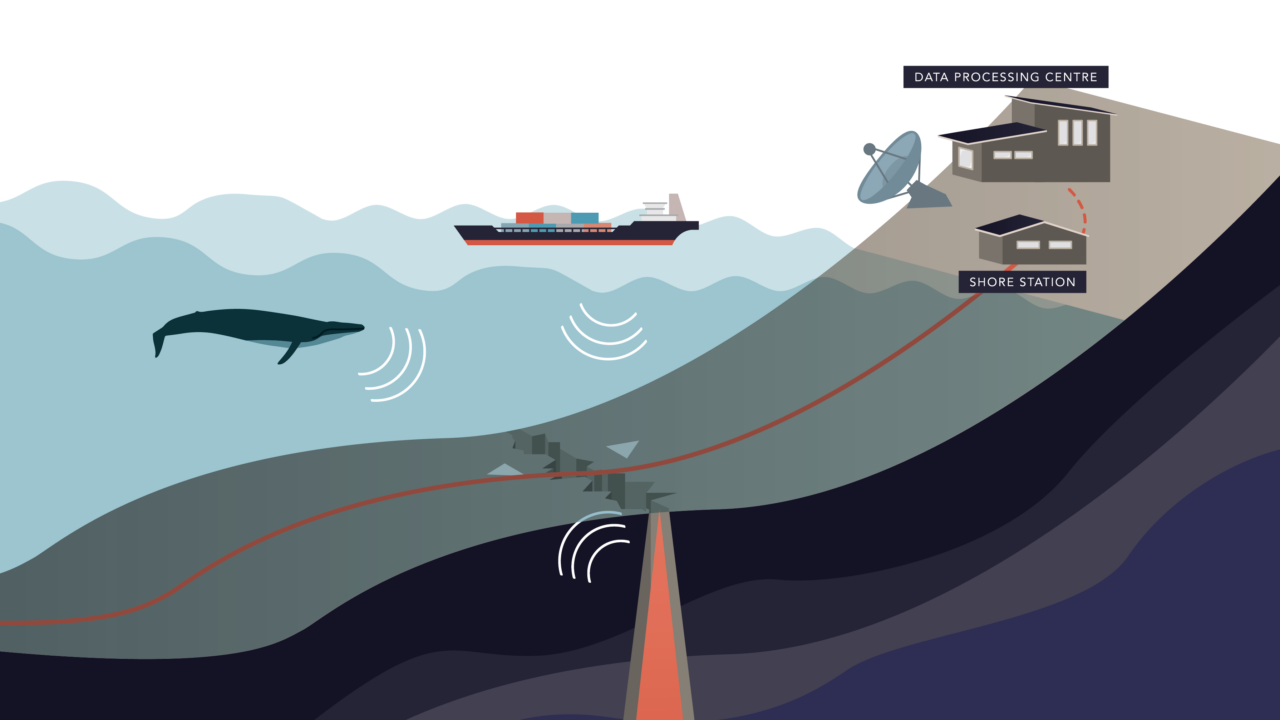
Distributed acoustic sensing (DAS) is a fibre optic sensing technique that uses laser pulses to detect vibrations and acoustic signals along the entire length of an optical fibre. In contrast to conventional sensors that operate at specific points, DAS enables continuous sensing over many kilometres of fibre, effectively turning the cable into thousands of virtual sensors.
How Distributed Acoustic Sensing Works
The system comprises a laser beam that emits short pulses into a fibre optic cable from an interrogator unit. A very small portion of the light travelling through the fibre is return to the source due to the glass imperfections. When the fibres are vibrate by external activities like footsteps, vehicle movement, or mechanical noise, the backscattere light pattern changes. The system, through its analysis,can with extraordinary accuracy ascertain the location, strength, and kind of the disturbance.
Since fibre optic cables can withstand electromagnetic interference and harsh environments, DAS systems become highly dependable and suitable for long-term monitoring in such settings.
Key Advantages of DAS Technology
One of the major benefits of distributed acoustic sensing is that it is able to give real-time continuous monitoring over very long distances with existing fibre optical infrastructure only. This minimizes the need to set up a number of discrete sensors, which, in turn, lowers installation and maintenance costs. Besides, DAS tech allows high spatial resolution, which leads to accurate event detection and localization.
Moreover, the passive nature of fibre optic cables makes DAS systems safer in hazardous or high-voltage areas, such as power grids or industrial plants.
Where Is Distributed Acoustic Sensing Used
DAS is a versatile technology with applications in various sectors. In the oil and gas sector, it is applied to pipeline monitoring for leakage detection, intrusion detection, and flow assurance. In the area of transport, DAS is a supporting technology for railway and road monitoring by detecting train movements, track integrity issues, and traffic patterns. Perimeter security is another area of application for the technology. Where it is used to detect unauthorized entry along the boundaries, like fences or borders.
In the energy sector, DAS supports monitoring of power cables and substations, while in smart cities, it supports infrastructure health monitoring and waste management. Seismic monitoring and environmental research are among those that benefit from DAS, considering its capability to detect even the slightest ground vibrations.
Companies working in this industry, like AusOptic, deliver fibre-based sensing solutions that combine technical expertise with practical implementation for reliable, real-world monitoring.
Conclusion
With its ability to transform standard fibre into a continuous sensing network, distributed acoustic sensing is redefining how industries approach monitoring and security. By offering real-time insights, high accuracy, and scalability, DAS enables organisations to protect assets, improve safety, and make data-driven decisions across a wide range of applications.